Jun 23, 2025|Blog, VAI Dispatch News, Industry
Automate and grow your business with VAI Dispatch
Book a demoEvery day, millions of passengers rely on taxis, ride-hailing services, and transportation providers to get where they need to go. Behind every completed trip is a dispatch system making dozens of decisions in real time. Who should receive the booking? Which driver can provide the best experience? Where should drivers position themselves? How should fleets respond to changing demand? Unfortunately, many dispatch platforms still rely on logic that was designed years ago. The nearest available driver receives the booking. The system waits for the next request. The process repeats. While simple, this approach often ignores the complexity of modern mobility operations. Today's transportation businesses operate in a world where: Traffic changes every minute. Demand fluctuates constantly. Customer expectations continue to rise. Operational efficiency directly impacts profitability. Mobility became smarter. Dispatching needed to evolve as well.
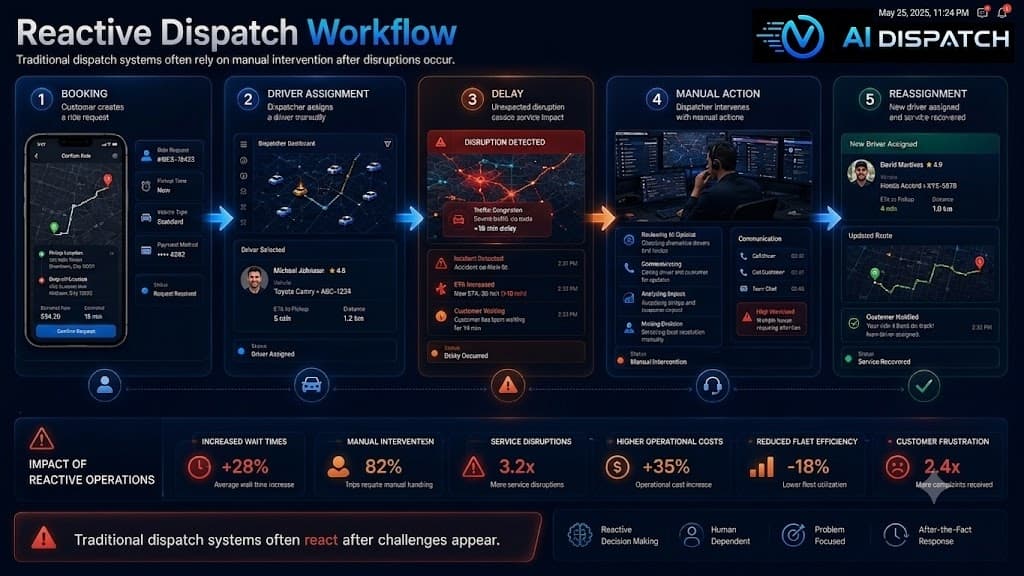
Reactive dispatching focuses on responding to events after they occur. A booking appears. A driver is assigned. A delay happens. The dispatcher responds. While this method works, it often creates operational inefficiencies.
Common challenges include:
Operators can see what's happening now but struggle to understand what may happen next.
The nearest driver isn't always the best driver.
Traditional systems often rely heavily on location data alone.
Demand spikes are identified only after they occur.
Teams spend valuable time reacting instead of planning.
As operations scale, these challenges become increasingly difficult to manage.
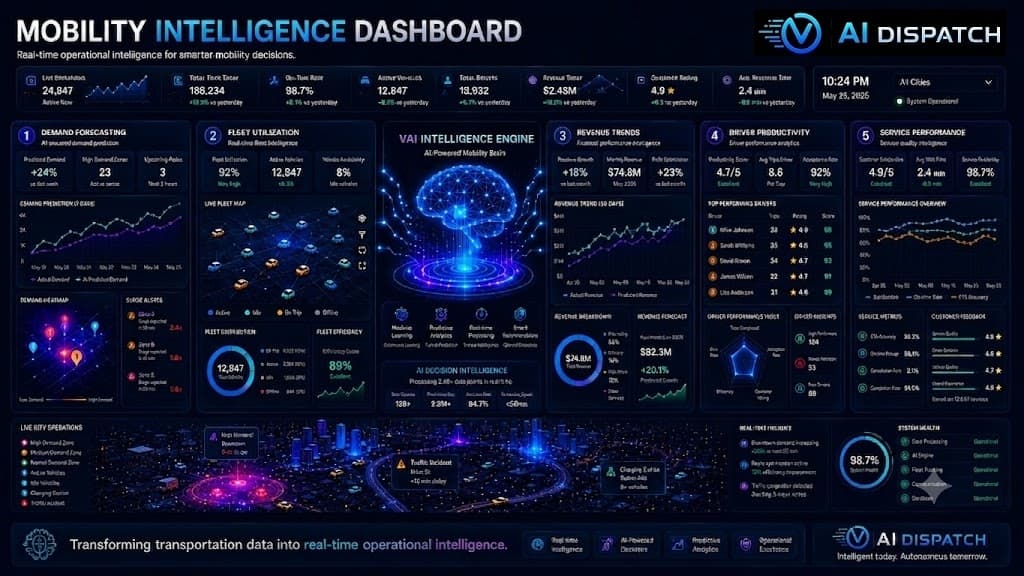
As we analyzed mobility operations, one thing became clear. There was no shortage of data. Every ride generated information. Every driver movement created patterns. Every completed trip revealed operational insights. Yet most of that intelligence remained unused. We started asking different questions: Which driver is truly the best match for this booking? Where will demand increase during the next hour? Which drivers are likely to become idle? What operational bottlenecks are affecting performance? Why is revenue lower than expected today? Traditional dispatch systems weren't designed to answer these questions. We wanted VAI Dispatch to answer them. That's where Artificial Intelligence became an essential part of our vision.
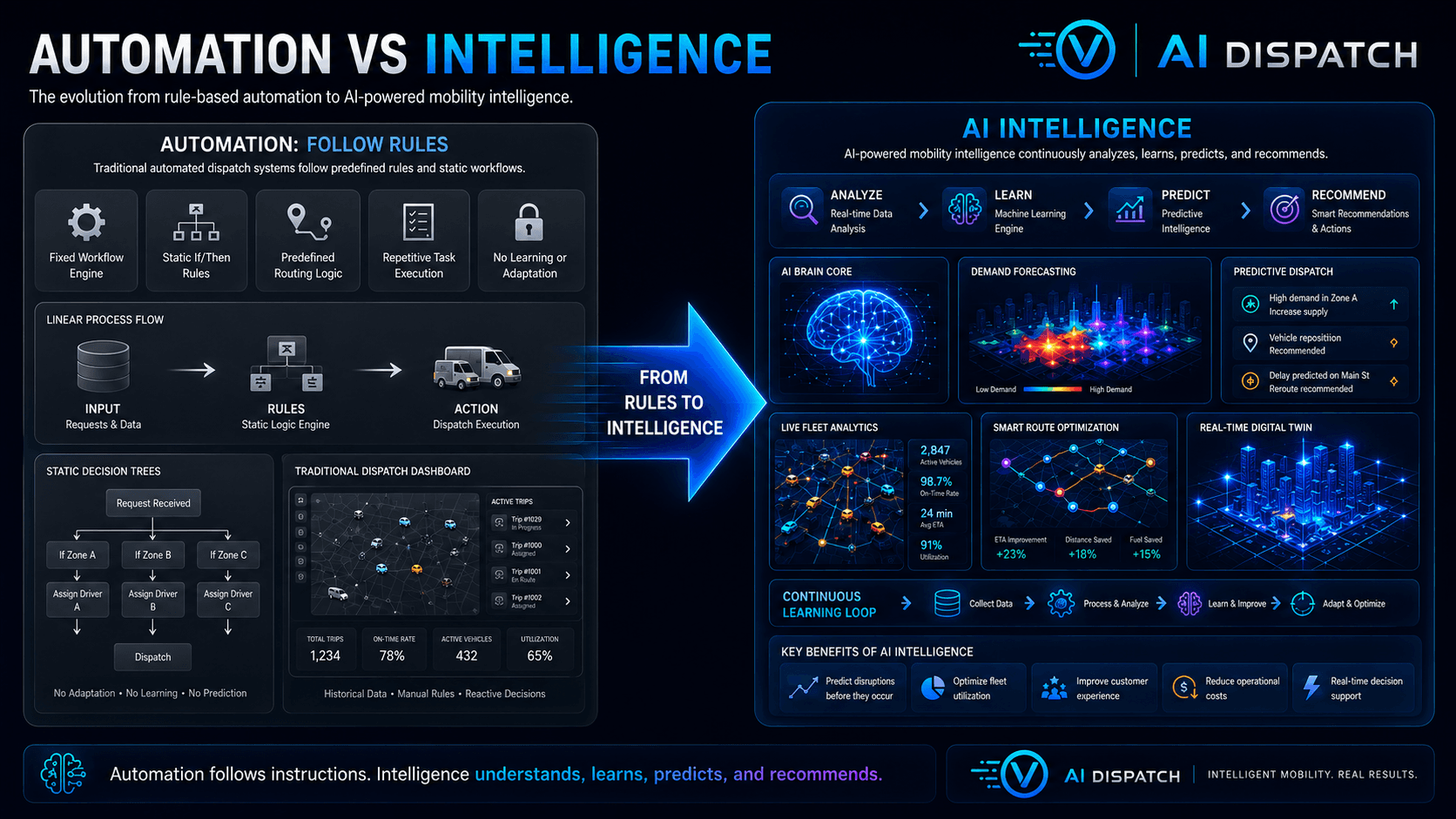
When people hear the term Artificial Intelligence, they often think about automation. For us, AI is about intelligence. There's a difference. Automation follows predefined rules. Intelligence helps improve decisions.
For example:
Automation might assign the nearest available driver.
Then recommend the best possible outcome. The goal isn't simply doing things faster. The goal is doing things smarter.
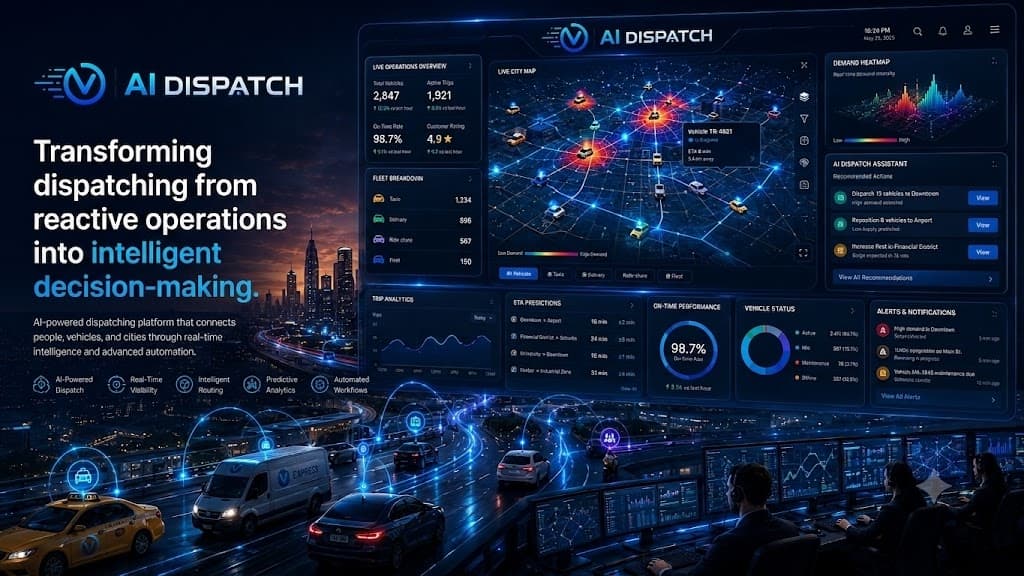
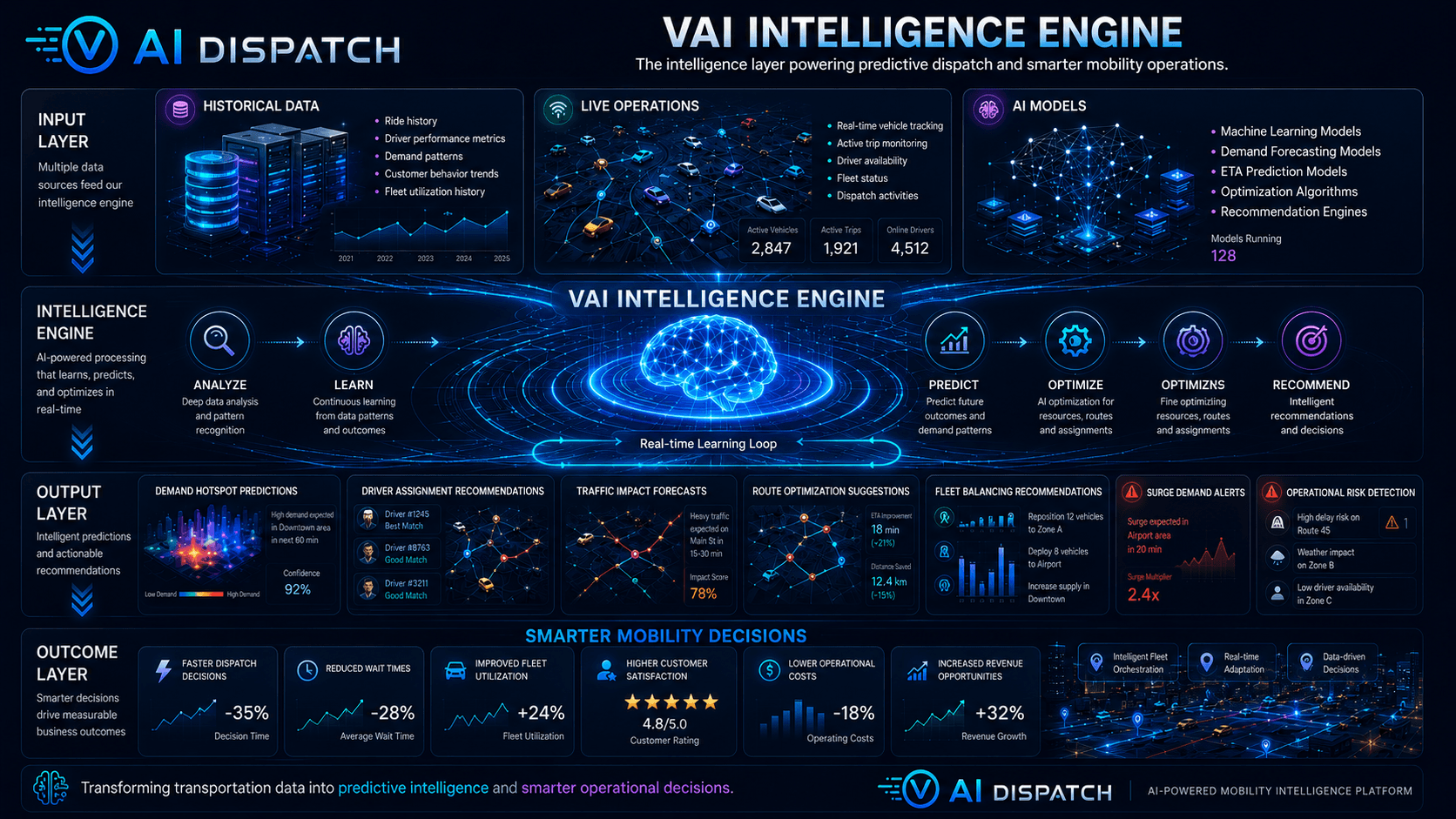
Introducing AI into VAI Dispatch changed how the platform thinks about mobility operations. Instead of simply processing bookings, the platform began supporting smarter operational decisions.
Traditional dispatch systems often focus on proximity.
The closest driver receives the booking. But mobility operations are more complex than distance alone. VAI Dispatch evaluates multiple factors before recommending an assignment, helping operators create better outcomes for both customers and drivers.
Accurate arrival estimates are critical to customer trust.
By combining historical ride intelligence with real-time operational data, AI helps generate more reliable ETA predictions. This improves communication, planning, and overall service quality.
One of the most valuable capabilities of AI is predicting future demand.
Rather than waiting for booking requests to appear, operators can gain visibility into areas likely to experience increased demand. This allows fleets to prepare proactively instead of reacting later.
Understanding performance is just as important as managing trips.
VAI Dispatch helps businesses identify operational trends, understand performance patterns, and uncover opportunities for improvement.
Instead of showing operators endless dashboards, VAI Dispatch can highlight meaningful insights and recommend actions that improve efficiency.
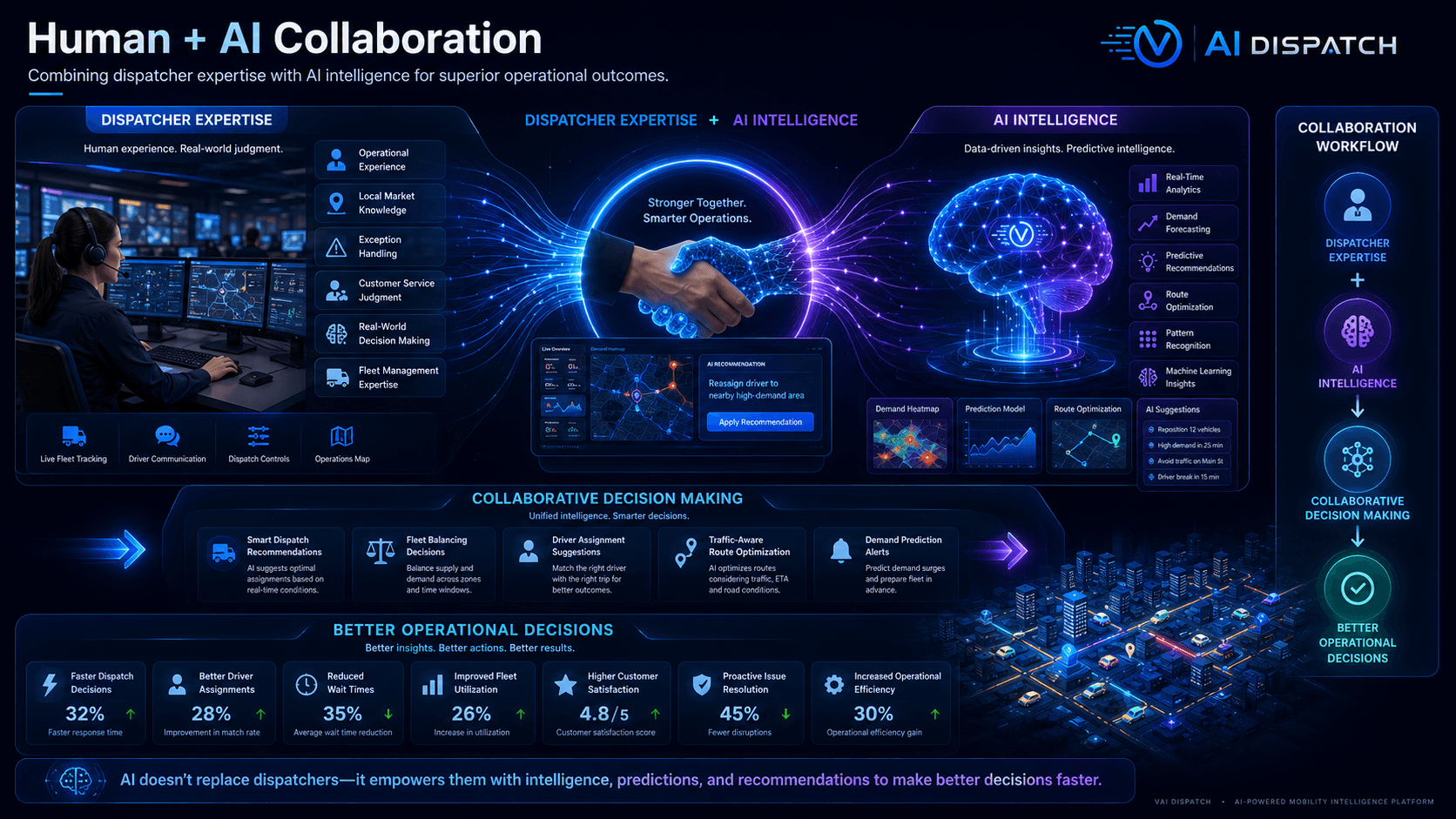
One of the biggest misconceptions about AI is that it replaces people. We don't see it that way. Dispatchers possess local knowledge, operational experience, and practical judgment that algorithms alone cannot replicate. Our goal is not to replace dispatch teams. Our goal is to help them make better decisions faster. Think of VAI Dispatch as a co-pilot. It helps identify opportunities. It highlights risks. It provides recommendations. But people remain in control. The best mobility operations happen when human expertise and intelligent technology work together.
Many dispatch platforms focus only on the current booking. We believe mobility businesses should think much bigger.
Important questions include:
Answering these questions requires more than dispatch software. It requires operational intelligence. The ability to understand not only what is happening today, but what is likely to happen tomorrow. That's where mobility is heading. And that's the future we're building toward.
Fleet Utilization
This transformation is only beginning. We're continuing to invest in capabilities that move mobility operations from reactive to predictive.
Future innovations include:
Our vision is straightforward: A future where mobility platforms don't simply manage operations. They continuously improve them.
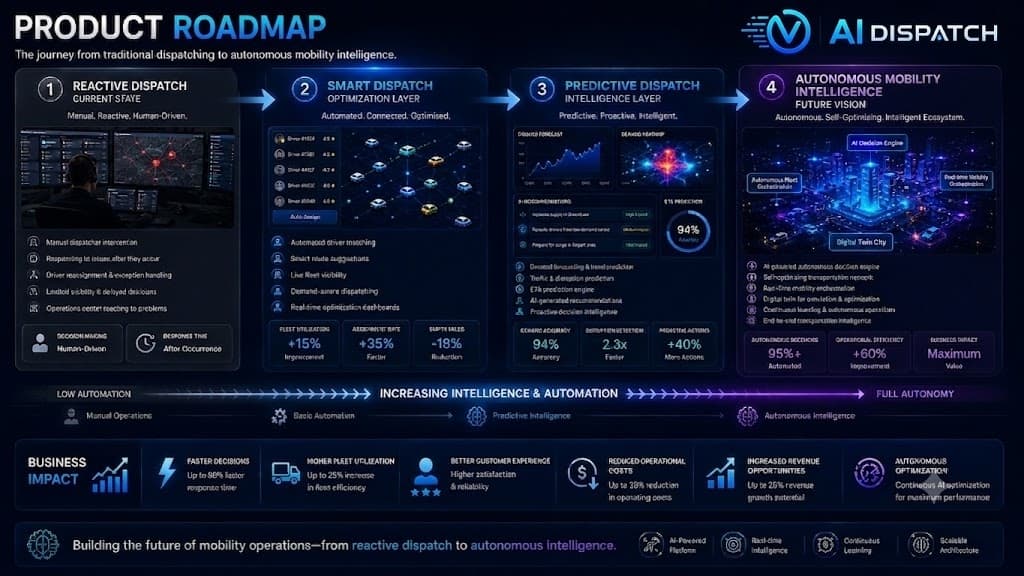
The future of mobility won't be defined by who has the most vehicles. It will be defined by who makes the smartest decisions. Traditional dispatch systems helped businesses manage operations. The next generation of platforms will help businesses improve them. That's why we built VAI Dispatch. To transform dispatching from a reactive process into an intelligent mobility platform capable of learning, adapting, and helping businesses make better decisions every day. Because the future belongs to organizations that don't just react to change. They anticipate it. And that's exactly what VAI Dispatch is built to do.